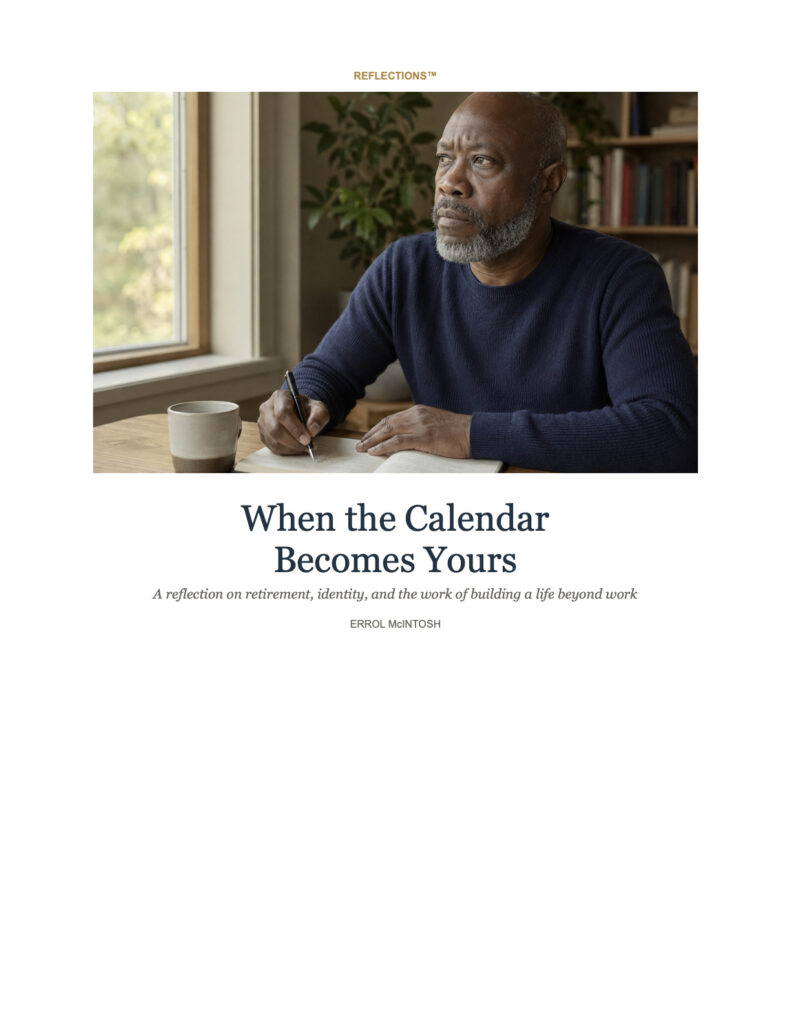
A reflection on retirement, identity, and the task of building a life beyond work
ERROL McINTOSH
For nearly thirty years, my days arrived already organized.
There were systems to maintain, problems to solve, people waiting for answers, and responsibilities that did not care whether I felt inspired that morning. A systems engineer learns a particular rhythm: check what happened overnight, respond to what is urgent, protect what is essential, and prepare for what might fail next. Even on quiet days, something was always running in the background.
Then one day, there wasn’t.
Retirement is often pictured as a finish line: the last commute, the farewell messages, the closed laptop, the first morning without an alarm. For a while, it does feel like a permanent vacation. Every day resembles a Saturday. There is nowhere you must be, no meeting waiting to claim the next hour, and no problem demanding an immediate answer.
At first, the freedom is exhilarating.
Then the silence becomes noticeable.
The routine that once felt restrictive disappears almost overnight, and you realize that it had been doing more than organizing your work. It organized your identity. It shaped the week, supplied conversations and small victories, and gave you a reason to know what day it was.
Without it, a harder question enters the room:
Who am I when no one needs me to do the job I spent decades learning to do?
That question does not appear on most retirement worksheets. They are concerned with savings, insurance, and whether the numbers will last. Those things matter. But when regular employment ends, you begin to consider not only the price of something, but whether it adds anything meaningful to your life.
Money and time seem to change places. During the working years, money is replenished and time is spent. In retirement, money may feel more finite, but time becomes visible – and precious. You become less willing to trade it casually.
That may be retirement’s first real recalculation: recognizing that time is the one asset no plan can restore.
Work also provides a ready-made community. After retirement, some calls continue. Others gradually stop. No one has necessarily done anything wrong. The organization moves forward, and relationships that felt permanent are revealed to have been partly held together by proximity and a common task.
There is sadness in that realization, but also clarity. Friendship outside work requires intention. New relationships do not arrive through a calendar invitation. They have to be cultivated through repeated contact, shared interests, curiosity, and a willingness to make the first call.
Life changes at home too. Both spouses may have imagined retirement without imagining the same retirement. More time together can deepen a relationship, but it can also expose habits and expectations that working schedules kept apart.
Retirement does not simply give a couple more time. It asks them to decide how that time will be shared – and when each person still needs room of their own.
Family begins to see your calendar differently. Because you are no longer working, it can appear that you are always available. Sometimes that is an expectation; often it is a gift. There is now room for the unhurried visit and the conversation that does not have to end because Monday morning is approaching.
I have made several trips to New Jersey to see my granddaughter. Those journeys do not feel like vacations in the usual sense. Their value is not measured by attractions visited or photographs collected. The destination is a person, and the purpose is presence. A young child changes quickly. Being able to return – to notice what is new, to become familiar rather than occasional – is one of the clearest ways retirement has turned time into something tangible.
The destination is a person, and the purpose is presence.
PRESENCE
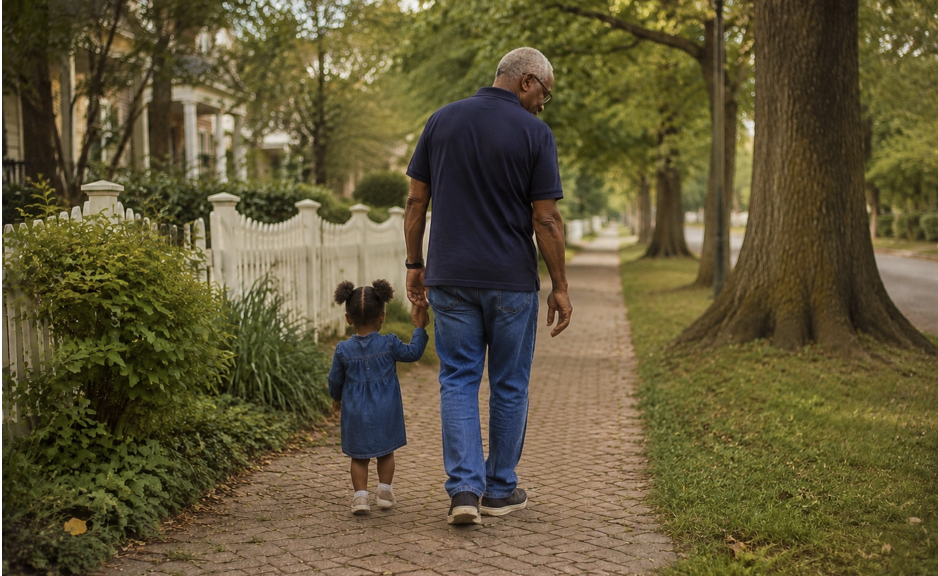
Editorial illustration. Privacy is preserved through a natural rear-view composition; the child’s identifying facial features are not shown.
Some journeys are measured not by attractions visited, but by the chance to become familiar rather than occasional.
There have also been trips to New Orleans and Georgia. Each departure has carried the simple pleasure of being able to go without forcing the experience into a narrow window between work obligations. Travel is no longer an annual escape from routine. It can be part of the routine.
Travel is no longer an annual escape from routine. It can be part of the routine.
MOVEMENT
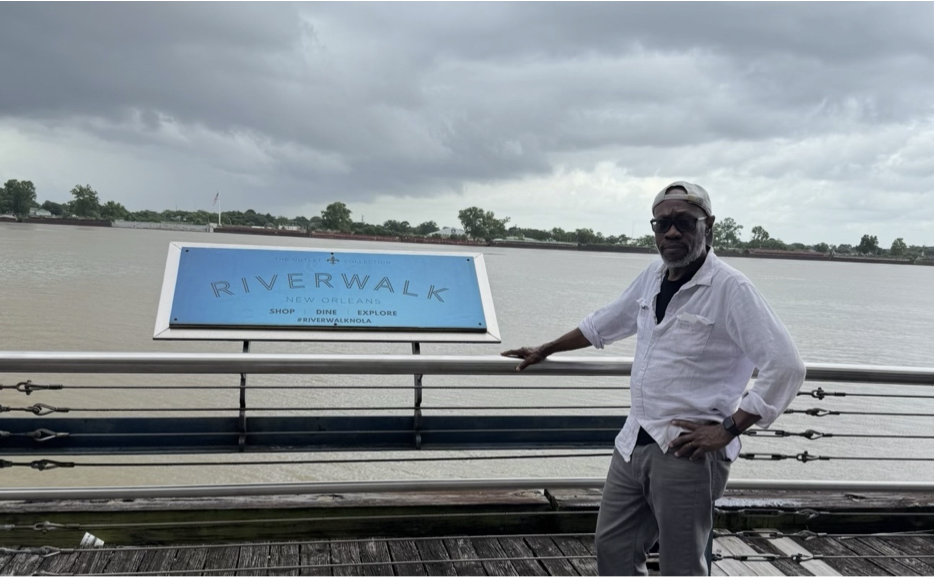
New Orleans Riverwalk. A documentary photograph from the author’s travels.
A passport can record movement, but it cannot provide direction.
That freedom matters, but I already have the travel part down. The more interesting question is what happens between the trips.
A passport can record movement, but it cannot provide direction. A full itinerary can postpone the question of purpose just as easily as a full work calendar once did. Retirement cannot be sustained as an endless vacation. Eventually, ordinary mornings return. The suitcase is put away. The photographs settle into a phone or a folder. You wake up at home with an open day in front of you.
What then?
The body gives one answer. Retirement removes the excuse that health can wait until the schedule becomes less demanding. Physical activity is now about preserving strength, balance, mobility, independence, and the ability to participate in the life I have time to enjoy.
TIME ALONE IS NOT FREEDOM. HEALTH DETERMINES HOW FULLY I CAN USE IT.
The engineer in me understands that. Systems rarely fail without warning. Performance degrades; small issues compound; maintenance deferred becomes a larger repair. The body is not a machine, but it does respond to care and consistency. Exercise, sleep, nutrition, medical attention, and recovery are not interruptions to retirement. They help determine its quality.
The mind needs its own form of movement. It is possible to remain busy and still become intellectually idle. Errands can fill a day without giving it meaning. Entertainment can consume an evening without leaving anything behind. The absence of work creates space; it does not decide what belongs there.
Curiosity has become one of my bridges from the life I had to the life I am building. Writing asks me to examine experiences instead of merely accumulating them. Photography asks me to notice what others – and I – might pass without seeing. Learning Spanish returns me to the useful discomfort of being a beginner. Technology still gives me new systems to understand, while business ideas give experience somewhere practical to go.
None of these pursuits needs to become another full-time job to justify itself. That distinction matters. After decades in which output was measured by uptime, completed projects, and problems solved, retirement offers the chance to value an activity without immediately turning it into an obligation.
Still, I do not want a life without useful work. The question is whether work can now serve the life, rather than the life serving the work.
I write, document what I have learned, develop ideas, and build systems that may help others give continuity to experience. These pursuits keep accumulated knowledge from living only in memory. Perhaps this is one form of purpose in retirement: not proving that I can still be productive, but deciding which parts of what I know are worth carrying forward.
There is also pleasure in becoming a beginner again. Professional competence can make not knowing feel uncomfortable. A new language, creative practice, or unfamiliar project restores humility. You ask basic questions, make awkward attempts, improve slowly, and discover that learning never belonged exclusively to youth. Age may change the pace; it does not cancel curiosity.
Retirement has also made smaller things easier to see: morning coffee without urgency, light entering a familiar room, a conversation allowed to wander, the satisfaction of finishing a modest project, the voice of a loved one on the phone. These moments were always present. What changed was my ability to notice them.
THE ORDINARY MORNING

Editorial illustration. The smaller moments were always present; what changed was the ability to notice them.
Purpose does not have to be grand. It has to be honest.
That may be why purpose matters more than busyness. Busyness is easy to manufacture. A crowded calendar can protect us from asking whether what fills it is meaningful. Purpose is quieter. It may be caring for family, protecting one’s health, creating something useful, mentoring someone younger, preserving hard-earned knowledge, or becoming more attentive to the people already in the room.
Purpose does not have to be grand. It has to be honest.
I am beginning to see retirement not as withdrawal, but as authorship. For most of adult life, large sections of the story are written for us. Education, employment, mortgages, family responsibilities, deadlines, and the need to earn a living determine much of the plot. Retirement hands back the pen.
That freedom is larger – and more demanding – than it appears.
It is not enough to create a life we escaped to. Escape is defined by what we are leaving. A meaningful retirement must eventually be defined by what we are moving toward. The people who seem most at peace do not merely stop working. They build routines that support them, relationships that nourish them, interests that stretch them, and days that feel like their own.
The future does not need a named destination yet. There will be more journeys, but I am less interested in collecting places than in remaining open to what each new season asks of me. The important direction may not appear on a map.
Reinvention is rarely dramatic while it is happening. More often, it is made of ordinary choices repeated quietly: take the walk, make the call, learn the phrase, write the page, protect the morning, be present for the people you love.
After nearly three decades of keeping systems running, I am learning that retirement is not delivered fully configured. It has to be designed, tested, adjusted, and lived into. There is no operating manual, no service-level agreement, and no dashboard that can tell me whether I am doing it correctly.
Perhaps the measure is simpler: Am I becoming more present, more curious, more useful, and more alive to the life in front of me?
Retirement is not the end of the story, nor is it an endless vacation. It is the moment when the calendar becomes yours – and when you must decide what deserves to be written on it.
The pen is in your hand.
REFLECTIONS™
Continue the reflection.
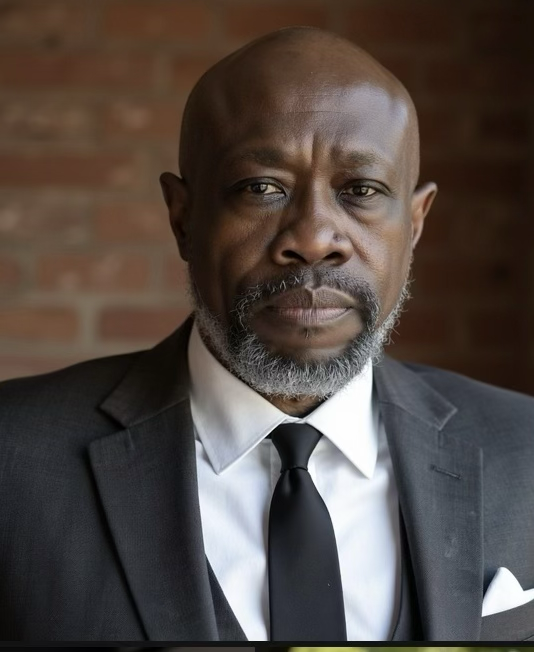
ABOUT ERROL McINTOSH
Errol McIntosh is a recently retired systems engineer whose work spans nearly three decades in technology. He writes about reinvention, travel, lifelong learning, photography, technology, and the quieter work of building an intentional life beyond employment.
What changed when your calendar became your own – or what do you hope will change when it does?
When the Calendar Becomes Yours is part of Reflections™, a continuing collection of essays on reinvention, travel, lifelong learning, technology, photography, and intentional living.
Written by Errol McIntosh. Revised digital edition, 2026.
Image notes: Cover – AI-assisted editorial portrait created from current author reference photographs. New Orleans Riverwalk and About portrait – author photographs. Grandfather and ordinary-morning scenes – editorial illustrations created for the essay; they are not represented as documentary photographs of the events described.